As temperatures drop, many UK homeowners start to notice the same problems appearing: water running down the windows in the morning, damp patches in the corners of rooms and black mould forming around window frames, ceilings and behind furniture.
Condensation is one of the most common causes of damp in UK homes, and it tends to be at its worst during the winter months.
The good news is that, in many cases, it can be reduced or prevented. Two of the most effective ways to tackle the problem are improving your home’s insulation and making sure it has the right ventilation.
In this guide, we’ll explain what causes condensation and mould, why it’s more common in winter and how insulation and ventilation can help keep your home warm, dry and healthy.
What Causes Condensation?
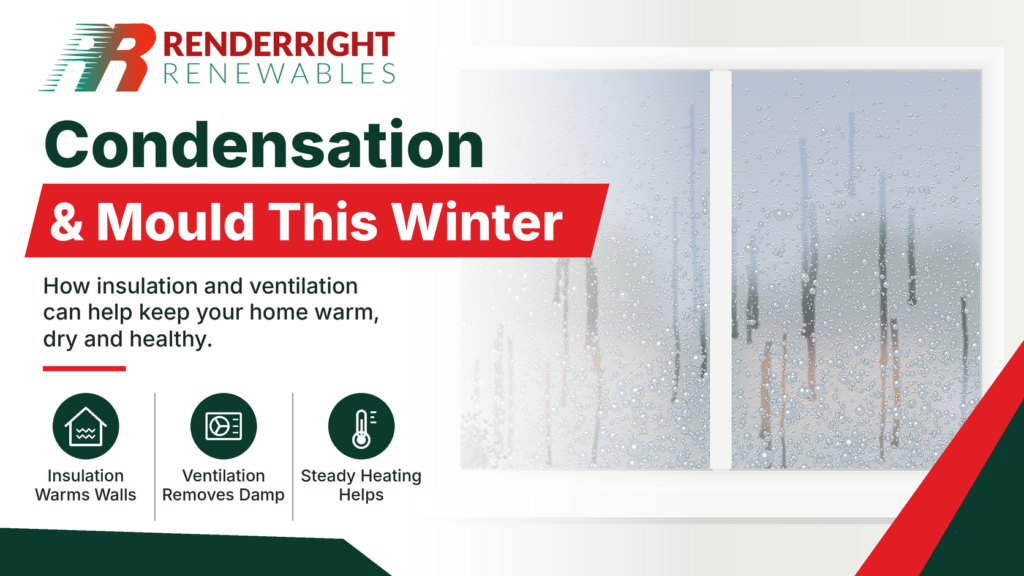
Condensation forms when warm, moist air comes into contact with a cold surface.
The air inside our homes holds moisture from everyday activities. When that air cools down against a cold window, wall or ceiling, it can no longer hold as much moisture, and the excess turns into water droplets on the surface.
This is the same process you see when droplets form on the outside of a cold glass of water on a warm day.
Where Does the Moisture Come From?
Every household produces a surprising amount of moisture each day, often several litres, through normal activities such as:
- Cooking, particularly boiling pans without lids.
- Showering and bathing.
- Drying clothes indoors.
- Using a tumble dryer that isn’t vented outside.
- Washing up.
- Breathing, especially in bedrooms overnight.
If this moisture can’t escape, it builds up inside the home and settles on the coldest surfaces.
Why Is Condensation Worse in Winter?
There are several reasons why condensation tends to increase during the colder months.
Colder Surfaces
When it’s cold outside, external walls, windows and ceilings become much colder too. These cold surfaces are where condensation is most likely to form.
Less Ventilation
In winter, we naturally keep windows closed to keep the heat in. While this helps keep homes warm, it also traps moisture inside.
More Moisture Indoors
With wet weather outside, more households dry clothes indoors, adding even more moisture to the air.
Why Condensation Leads to Mould
When condensation forms regularly in the same places, the surfaces stay damp for long periods. This creates the ideal conditions for mould to grow.
Mould often appears as black spots or patches in areas such as:
- Around window frames and sills.
- In the corners of rooms, particularly on external walls.
- Behind wardrobes and furniture placed against cold walls.
- On bathroom and kitchen ceilings.
- In rooms that are rarely heated.
As well as damaging decoration, plaster and belongings, mould can affect indoor air quality. Damp and mouldy conditions are linked to respiratory problems and can be particularly harmful for children, older people and anyone with asthma or other health conditions.
Is It Condensation or Another Type of Damp?
It’s important to understand the cause of damp before deciding how to treat it.
Condensation is not the only type of damp. Other common causes include:
- Penetrating damp: water getting in from outside, often through damaged render, brickwork, guttering or roofs.
- Rising damp: moisture rising from the ground through walls, usually due to a failed or missing damp-proof course.
- Leaks: from plumbing, roofs or appliances.
Condensation tends to appear on cold surfaces, gets worse in winter and is often found in kitchens, bathrooms and bedrooms. If you’re unsure of the cause, it’s worth getting a professional assessment.
How Insulation Helps Reduce Condensation
One of the main reasons condensation forms is that internal surfaces are too cold. Improving insulation helps to keep these surfaces warmer, making it much harder for condensation to form.
External Wall Insulation
Solid walls, which are common in older properties, can be particularly cold on the inside during winter. This makes them prone to condensation and mould, especially in corners and behind furniture.
External Wall Insulation adds a layer of insulation to the outside of the property, keeping the walls on the warm side of the insulation.
This raises the temperature of internal wall surfaces and helps to reduce cold spots around areas such as wall junctions, floor joists and window reveals, which are often where mould first appears.
Loft Insulation
Cold ceilings, particularly in top-floor rooms and bathrooms, are another common place for condensation and mould.
Installing or topping up Loft Insulation helps keep ceilings warmer and reduces heat loss through the roof, making the whole home easier to heat.
A Warmer Home Overall
A well-insulated home is easier to keep at a steady, comfortable temperature. Homes that are heated evenly tend to experience less condensation than those with large temperature swings or rooms that are left cold.
Why Ventilation Is Just as Important
Insulation helps keep surfaces warm, but moisture still needs a way to escape.
As homes become better insulated and more airtight, managing moisture becomes even more important. Without adequate ventilation, moisture can build up inside the property, which may lead to condensation in other areas.
That’s why insulation and Ventilation should always be considered together.
Common ventilation options include:
Extractor Fans
Extractor fans in kitchens and bathrooms remove moisture at the source, before it has a chance to spread around the home. Modern fans can be set to run automatically when humidity levels rise.
Trickle Vents
Trickle vents are small openings, usually built into window frames, that allow a steady flow of fresh air into the home without the need to open windows.
Positive Input Ventilation (PIV)
PIV systems gently introduce filtered fresh air into the home, usually from the loft, helping to dilute and push out moist air. They can be particularly effective in homes with persistent condensation.
Whole-House Ventilation
For highly insulated homes, whole-house ventilation systems can provide a continuous supply of fresh air while removing stale, moist air. Some systems also recover heat from the outgoing air.
The right option will depend on your property, how it’s used and the level of insulation.
Simple Ways to Reduce Condensation at Home
Alongside insulation and ventilation improvements, there are some simple everyday steps that can help:
- Put lids on pans when cooking.
- Use extractor fans when cooking and showering, and leave them running for a while afterwards.
- Keep kitchen and bathroom doors closed while in use.
- Dry clothes outside where possible, or in a well-ventilated room.
- Make sure tumble dryers are vented outside.
- Open windows for a short time each day to let moist air escape.
- Keep trickle vents open and don’t block air vents.
- Leave a small gap between furniture and external walls.
- Try to keep your home heated to a steady, low temperature rather than allowing it to become very cold.
- Wipe away condensation from windows each morning.
Condensation and Mould in Social and Rented Housing
Damp and mould have become a major focus for landlords and housing providers in recent years.
In England, Awaab’s Law now requires social landlords to investigate and fix damp and mould hazards within set timescales.
Many housing associations and local authorities are investing in retrofit programmes that combine insulation upgrades with improved ventilation, helping to create warmer, healthier homes for residents while reducing the risk of damp and mould.
Tackling Condensation and Mould for Good
Condensation and mould are common winter problems, but they don’t have to be a permanent part of life in your home.
By keeping internal surfaces warmer with good insulation and allowing moisture to escape with the right ventilation, you can significantly reduce the conditions that allow condensation and mould to develop.
Every property is different, so understanding the cause of the problem is the first step towards finding the right solution.
At Render Right Renewables, we deliver external wall insulation, loft insulation and ventilation solutions for homeowners, housing associations and local authorities across the UK.
Our experienced team can assess your property, identify the factors contributing to condensation and recommend improvements to help create a warmer, drier and healthier home.
Contact Render Right Renewables today to find out how insulation and ventilation could help reduce condensation and mould in your home.