With energy prices remaining a major concern for UK households, many homeowners are looking for long-term ways to reduce the cost of heating their homes.
One improvement that continues to attract attention is External Wall Insulation (EWI), which adds a layer of insulation to the outside of a property to reduce heat loss through the walls.
But does it actually make a difference to your energy bills?
The short answer is that, for the right property, it can. However, the level of savings you could achieve depends on several factors, including the construction of your home, how well it is currently insulated and how you heat it.
In this guide, we’ll explain how EWI works, how it can help reduce energy consumption and what to consider before deciding whether it’s right for your home.
What Is External Wall Insulation?
External wall insulation is a system that is fixed to the outside walls of a property to improve its thermal performance.
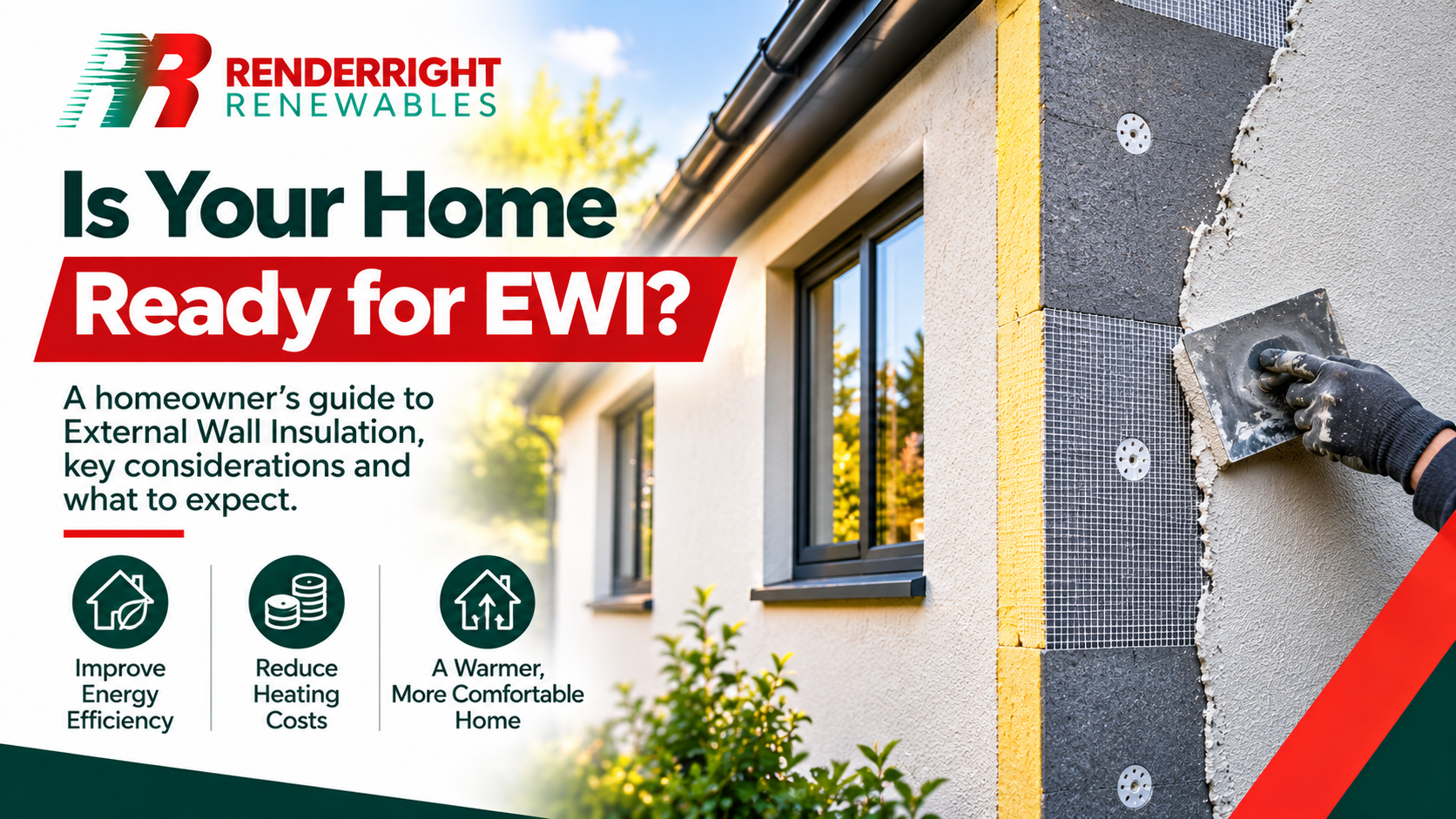
Insulation boards are secured to the existing walls using adhesive and mechanical fixings. A reinforcing layer and mesh are then applied, before the system is finished with a protective render or decorative coating.
The result is a continuous insulating layer that wraps around the property, helping to keep heat inside the home for longer.
It is most commonly installed on properties with solid walls, which were typically built before the 1930s and do not have a cavity that can be filled with insulation.
It can also be suitable for some non-traditional construction types, such as concrete or steel-framed homes, as well as properties where cavity wall insulation is not an option.
How Does a Home Lose Heat?
To understand how EWI can help reduce energy bills, it’s worth looking at where heat escapes from a typical home.
In an uninsulated property, heat is lost through several areas, including:
- The walls.
- The roof and loft space.
- Windows and doors.
- Floors.
- Gaps and draughts around the building.
Walls are often one of the largest sources of heat loss. In an uninsulated home, around a third of all heat lost can escape through the external walls.
Solid walls in particular allow heat to pass through much more quickly than insulated cavity walls. This means your heating system has to work harder and run for longer to maintain a comfortable temperature.
Does EWI Help Reduce Energy Bills?
When installed on a suitable property, external wall insulation can significantly reduce the amount of heat escaping through the walls.
Because less heat is lost, your home stays warmer for longer and your heating system doesn’t need to work as hard. Over time, this can lead to lower energy consumption and reduced heating bills.
Here’s how EWI helps:
1. Reduces Heat Loss Through the Walls
The main benefit of external wall insulation is its ability to slow down the rate at which heat escapes from your home.
By adding an insulating layer to the outside of the walls, the system improves the property’s thermal performance and helps retain the heat produced by your heating system.
2. Reduces Thermal Bridging
Thermal bridges are areas where heat can escape more easily, such as around floor joists, wall junctions and window reveals.
Because EWI is applied as a continuous layer across the outside of the building, it can help reduce many of these weak points, which is something internal insulation can’t always achieve.
3. Helps Your Home Hold Its Temperature
Solid masonry walls are capable of storing heat. When insulation is installed on the outside, the walls sit on the warm side of the insulation and can help the property maintain a more stable indoor temperature.
This means rooms can stay warmer for longer after the heating is switched off.
4. Reduces the Workload on Your Heating System
When your home retains more heat, your boiler or heat pump doesn’t need to run as often or as intensively.
As well as helping to reduce energy consumption, this may also reduce wear on your heating system over time.
How Much Could You Save?
The amount you could save on your energy bills will vary from property to property.
Some of the factors that influence potential savings include:
- The type and size of your property.
- Whether your home has solid walls or cavity walls.
- The current level of insulation.
- The type and thickness of insulation installed.
- How you heat your home and the fuel you use.
- Your household’s energy usage habits.
- Current energy prices.
Generally, properties with uninsulated solid walls have the most to gain, as they tend to lose heat more quickly than other types of homes.
Detached and semi-detached properties, which have more exposed external wall area, may also see greater benefits than mid-terraced homes.
While external wall insulation is a significant investment, it should be viewed as a long-term improvement. The savings on heating costs build up year after year, and the system can last for decades when properly installed and maintained.
Other Benefits of External Wall Insulation
Lower energy bills are only one of the advantages of installing EWI. Homeowners may also benefit from:
- A warmer, more comfortable home throughout the year.
- Fewer cold spots and draughts.
- A reduced risk of condensation on internal walls.
- Improved protection for external walls against the weather.
- A refreshed, modern appearance with a range of colours and finishes.
- A potential improvement in your property’s Energy Performance Certificate (EPC) rating.
- Reduced carbon emissions.
Unlike internal wall insulation, EWI also doesn’t reduce the size of your rooms, and much of the work can be carried out with minimal disruption inside the home.
Why Insulation Should Be Considered as a Whole
While EWI can make a big difference on its own, the best results usually come from treating the property as a whole.
Heat will always find the easiest way out of a building. If your walls are insulated but your loft is not, a significant amount of heat can still escape through the roof.
Loft Insulation
In an uninsulated home, roughly a quarter of heat can be lost through the roof.
Installing or topping up Loft Insulation is one of the most cost-effective ways to improve energy efficiency, and it works well alongside external wall insulation to reduce heat loss across the whole property.
Ventilation
As homes become better insulated and more airtight, managing moisture becomes increasingly important.
Everyday activities such as cooking, showering and drying clothes create moisture. Without adequate airflow, this can lead to condensation and mould.
That’s why suitable Ventilation should always be considered as part of any insulation project. This can include extractor fans, trickle vents or whole-house ventilation systems, depending on the property.
A well-insulated home with the right ventilation will be warmer, healthier and more efficient.
Is EWI Suitable for Every Home?
External wall insulation can be an effective improvement for many properties, but it isn’t always the right solution.
Before an installation goes ahead, a survey should be carried out to assess:
- The type and condition of the existing walls.
- Any signs of damp or moisture issues.
- The existing levels of insulation in the property.
- Ventilation arrangements.
- Whether planning permission may be required.
- How windows, doors, pipework and rooflines will be affected.
In some cases, repairs may need to be carried out before insulation can be installed. Addressing these issues at the start helps ensure the system performs as expected and delivers long-term results.
Is Funding Available for External Wall Insulation?
Some homeowners may be eligible for government-backed funding to help with the cost of insulation improvements.
Eligibility can depend on factors such as your household income, the energy efficiency of your property and whether you receive certain benefits. Social housing providers and local authorities may also run their own retrofit programmes.
As funding schemes and eligibility criteria can change, it’s worth speaking to an experienced installer who can advise on what may be available for your property.
Does EWI Help Reduce Energy Bills? The Verdict
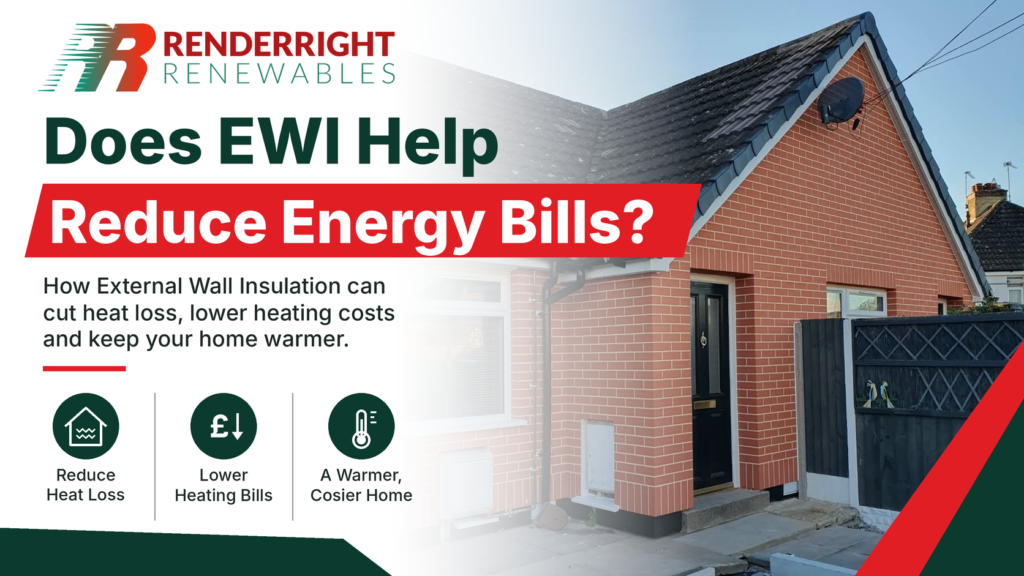
For many UK homes, particularly those with solid walls, External Wall Insulation can be one of the most effective ways to reduce heat loss and lower heating bills.
By keeping more heat inside the property, EWI can help create a warmer, more comfortable home while reducing the amount of energy needed to heat it.
The level of savings will depend on your property and how it is used, but when combined with other improvements such as loft insulation and suitable ventilation, the results can be significant.
Homeowners considering Rendering Coventry may also find that combining new render with external wall insulation is a cost-effective way to improve both the appearance and energy efficiency of their property at the same time.
At Render Right Renewables, we deliver professional external wall insulation and retrofit solutions for homeowners, housing associations and local authorities across the UK.
Our experienced team can assess your property, explain the options available and recommend the most suitable solution for your home.
Contact Render Right Renewables today to find out how external wall insulation could help reduce your energy bills and improve the comfort of your home.