The upfront cost of solar panels and battery storage has long been one of the biggest barriers for homeowners considering renewable energy.
That could be about to change.
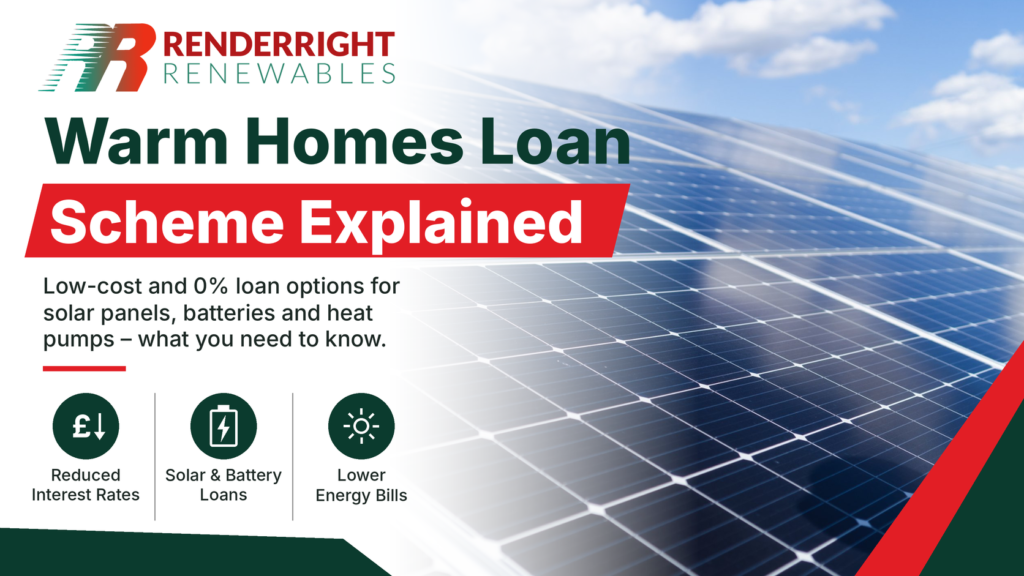
Under the Government’s new Warm Homes Loan Scheme, households across the UK may be able to access low-cost and even 0% interest loans to help pay for Solar Panels, battery storage and other low-carbon home improvements.
The scheme has received plenty of attention in recent weeks, including from consumer champion Martin Lewis, who has described the finance on offer as looking “pretty decent”.
In this guide, we’ll explain what the Warm Homes Loan Scheme is, what it covers, how it works and what to consider before applying.
What Is the Warm Homes Loan Scheme?
The Warm Homes Loan Scheme is part of the Government’s wider Warm Homes Plan, which aims to make homes across the UK warmer, cheaper to run and more energy efficient.
Rather than offering grants, the scheme provides access to cheaper finance for energy-saving home improvements.
The loans are provided by participating lenders, such as banks, credit unions and specialist finance providers. The Government partially backs these loans, which allows lenders to offer lower interest rates than they normally would.
The Government marked the launch of the scheme on 26 October 2026. It is being introduced as an initial “trial and learn” phase, with a first group of lenders taking part.
What Can the Loans Be Used For?
The scheme covers a range of renewable and low-carbon technologies. The maximum amount you can borrow depends on the type of improvement:
- Solar panels: up to £15,000.
- Battery storage: up to £15,000.
- Air-to-water heat pumps: up to £20,000.
- Air-to-air heat pumps: up to £10,000.
- Ground source heat pumps: up to £35,000.
- Biomass boilers: up to £20,000.
- Heat network connections: up to £7,500.
- Micro-renewables, such as domestic wind turbines: up to £20,000.
This means that homeowners looking to install solar panels together with battery storage could potentially borrow for both.
Are the Loans Really Interest-Free?
This is one of the most common questions about the scheme.
Some households may be able to borrow at 0% interest. However, interest-free finance is not guaranteed for everyone.
Under the scheme, participating lenders can reduce their usual interest rates by up to five percentage points. For example, a loan that would normally be offered at 8% could be offered at around 3%.
Where a lender’s usual rate is already low, this reduction could bring the rate down to 0%.
The exact rate you are offered will depend on the lender, the type of loan and your own circumstances.
How Long Can You Repay the Loan Over?
Loans under the scheme have a minimum repayment term of three years, with some lenders offering terms of up to 30 years.
While longer terms can make monthly repayments more affordable, they may also increase the total amount you repay over the life of the loan, particularly where interest is charged.
It’s also important to be aware that some loans available under the scheme may be secured against your property.
Who Can Apply?
According to MoneySavingExpert, the scheme is aimed at households across the UK. However, full eligibility details have not yet been confirmed.
As with any loan, you would expect lenders to carry out their own credit and affordability checks before approving an application.
Who Are the Participating Lenders?
The first lenders taking part in the scheme include:
- HomeServe (in partnership with E.ON).
- HTG Finance.
- Propensio.
- Secure Trust Bank.
- Selina Finance.
- South Manchester Credit Union.
- Sunsave.
- Tandem Bank.
- The Money Co-op.
- This Bank.
More lenders may join as the scheme develops, and each lender will set its own rates, terms and eligibility criteria.
How Do You Apply?
The loans will be offered through the participating lenders, rather than directly by the Government.
At the time of writing, the dates when applications open have not yet been confirmed. MoneySavingExpert has said it plans to look at each lender’s rates in more detail once the loans are available.
If you’re interested, it’s worth keeping an eye on MoneySavingExpert and the lenders’ own websites for the latest updates.
Solar Panels and Batteries: Why the Scheme Could Make a Difference
For many households, the potential savings from solar energy are clear, but finding the money upfront can be difficult.
Cheaper finance could make it easier to spread the cost of an installation while starting to benefit from lower electricity bills straight away.
Solar Panels
Solar panels generate electricity from daylight, allowing you to power your home with your own renewable energy and reduce the amount of electricity you buy from the grid.
Any surplus electricity can also be exported to the grid, and you may be paid for it through the Smart Export Guarantee.
Solar Battery Storage
Adding Solar Batteries allows you to store the electricity your panels generate during the day and use it in the evening, when household demand is usually at its highest.
Batteries can also be charged using cheaper off-peak electricity tariffs, helping you make even greater savings.
Air Source Heat Pumps
The scheme also covers Air Source Heat Pumps, which can be paired with solar panels to help reduce the running costs of heating your home.
In England and Wales, the loans can also be used alongside the Boiler Upgrade Scheme grant towards the cost of a heat pump.
Things to Consider Before Applying
While the Warm Homes Loan Scheme could offer a more affordable way to fund energy improvements, it’s important to make an informed decision.
Martin Lewis and MoneySavingExpert have highlighted several points homeowners should be aware of:
- Some loans are secured. Check whether a loan is secured against your home before you apply.
- Longer terms can cost more. Spreading repayments over a longer period may increase the overall cost.
- Compare quotes. Make sure the price of your installation is fair and competitive, regardless of the finance available.
- Beware of scams. Be cautious of anyone contacting you unexpectedly and claiming to be part of the scheme.
You should always read the terms of any loan carefully and only borrow what you can comfortably afford to repay.
Where Can You Find Out More?
As the scheme is still in its early stages, more details on lenders, rates and eligibility are expected over the coming months.
For a detailed breakdown of the scheme, including Martin Lewis’ views and the latest updates, you can read the full article on MoneySavingExpert.
Is Now the Right Time to Install Solar Panels?
With cheaper finance on the way and domestic solar installations currently benefiting from a 0% VAT rate, many homeowners may feel that now is a good time to explore their options.
Every home is different, so the first step is to find out whether your property is suitable and what type of system would best meet your needs.
At Render Right Renewables, we install solar panels, battery storage and renewable energy systems for homes across the UK.
Our experienced team can survey your property, explain your options and provide a clear, detailed quote.
Contact Render Right Renewables today to find out how solar panels and battery storage could benefit your home.